You are working on Staging
Bikes & Gear - Trek Travel

The Ultimate Game Changer

Why are some “scripts” so hard to change?

Words by Nora Linville, Trek Travel Guest

Two years ago I began training for the Trek Travel 2015 Cross Country USA trip from Portland to Portland to commemorate turning 60 when I discovered I have a heart arrhythmia. All is well, but a ride that strenuous is not in the cards. So I booked the May 2016 Croatia and Dalmatian Coast trip instead. Six months before the ride I tore my MCL and was off the bike for four months. I went on the trip knowing I wasn’t in peak shape for the route profile, but thought I’d be okay with simply riding as much as I could.
 
 
Trek Travel Croatia and Dalmatian Coast Bike Tour
 
 
As it turns out, I wasn’t ok with it at all. My internal “script” says I must ride every mile, even if it’s killing me. So I had three options:
Option 1: Continue to be miserable.
Option 2: Ride in the van to the top of each climb. No way, not me.
Option 3: Ask if one of the e-bikes was available. Heck no, that’s cheating!

Consequently, I was so stressed it was ruining my cycling vacation of a lifetime. One morning, our awesome guide informed me that an e-bike was available, so I decided to grow up and take advantage of the gift being offered. Whoo weee, what a blast! These bikes are amazing! You still get a great workout using your own pedal power, but the boost is available when you just need that extra oomph. And to think I almost let my pride get in the way of a fantastic experience.

I had to have one of my own, so I used the Trek Travel discount coupon and purchased the Trek XM700+. It’s a game changer for me and I absolutely LOVE it. I can now comfortably do climbs that I would otherwise struggle with and also use it to commute to work at 27 mph.
 
 
Trek Travel Electric-Assist Bikes


Available at no additional cost.

Learn More

Why I Ride: Grace Heimsness

On the first birthday Joe Strommer didn’t have, his dad walked into the shop with one of the dogs and a dozen doughnuts. It had been four months since Joe’s suicide, and what had been a brutal winter was just beginning to thaw.

The dog, immediately familiar with the worn wood of the shop floor, curled up in the corner as Erv passed around our surprise breakfast and sat heavily on a stool. He wasn’t a big man, but he was an old man with a hunched back and poor vision, and a terrible driver; Joe used to joke with us about how his pops was going to kill him one of these days. We continued to work on morning repairs, steady but unhurried, while Erv began to talk.

Joe was a year-round regular at the shop, which is saying something in Minnesota. While he towered over most of us at well over six feet tall, more often than not he could materialize quietly in front of you, as if out of nowhere. He’d ride through each winter on a massive 29er and sail through the less bitter seasons on a singlespeed. Although he bought a Domane from us in 2011 or ’12, I don’t remember him ever joining us on a shop ride—he preferred instead to ride alone.
 
 
Trek Travel guide Grace Heimsness previously worked at Rydjor Bike Shop
 
 
But his style of riding didn’t matter to us so much as his love of turning the pedals. His was the sort of company you appreciate in the long off-season and wish you could slow down enough to enjoy in the summer. On season and off, he’d often bring us doughnuts in the morning or beer in the afternoon, and in the latter case he’d wait until we closed for the day so we could all sit down and talk about nothing in particular. His smile was easy, if crooked, and we happily matched it.

While Joe could be quiet when he came to keep us company, his was the sort of silence you didn’t mind. And maybe it ran in the family; on those occasions his dad accompanied him to the shop, Erv was more often than not content to sit back for the duration of their visit, saying nothing, only bending over now and then to untangle dog leashes. But this April morning, Erv had something to say. It started with a single story, one yarn piling on top of the other, until it became a sort of eulogy meant just for us. It was what we had been waiting for while dealing with the shellshock that is the unreasonable loss of a close friend, and the overdue realization that a customer is more than just that. If only for a moment, Erv brought Joe back to us.

I never had the chance to ride with Joe Strommer, but I have no doubt what he looked like in the saddle. On the Easter Sunday before he died, we passed each other mid-ride, neither of us stopping long enough to trade pleasantries. We only saluted each other with a crooked grin and one hand reaching into the expanse of asphalt between us, open palms raised. It was one of the first calm days of spring, and we both knew without saying that there’s no good reason to stop when it’s warm enough to keep going. I’d never seen Joe look happier.

For awhile after his death, I regretted not stopping to talk to Joe that day. But when Erv stopped by that April morning to give us breakfast and leave us with a piece of Joe that we could hold onto, I remembered the importance of an early spring bike ride in Minnesota. I understood that Joe and I had passed each other knowing that, even more than the world, we ourselves are best seen from the seat of a bicycle. And I understood that that was enough.
 
 
At Trek Travel, we believe the world is best seen from the seat of a bike
 
 
Grace Heimsness is a first-year guide for Trek Travel. Join her in Utah this Spring»

Get an Inside Look at Trek’s US Factory

Trek is one of the few companies producing carbon frames in the United States. Here’s what goes on in its Wisconsin headquarters.

Bicycling Magazine
By Molly Hurford | October 22, 2015

 
Trek Bikes Factory Headquarters in Waterloo, Wisconsin
 

Trek’s History:

Trek has been around since our country’s bicentennial in 1976. It was founded in the small manufacturing town of Waterloo, Wisconsin, about 20 minutes outside of Madison. The factory remains in Waterloo, though much has changed since its inception. Eric Bjorling, Trek’s brand communications guru, gave us a tour that began with the mini-museum in the foyer of the building. And you might notice the heritage logo popping up more and more as the brand has “rediscovered our passion for the history of the company,” Bjorling said.


Trek Bikes Wisconsin Factory Headquarters Tour by Bicycling Magainze


Learn more about Trek’s Wisconsin headquarters in Bicycling Magazine»

Top 10 Reasons to Ride Electric-Assist

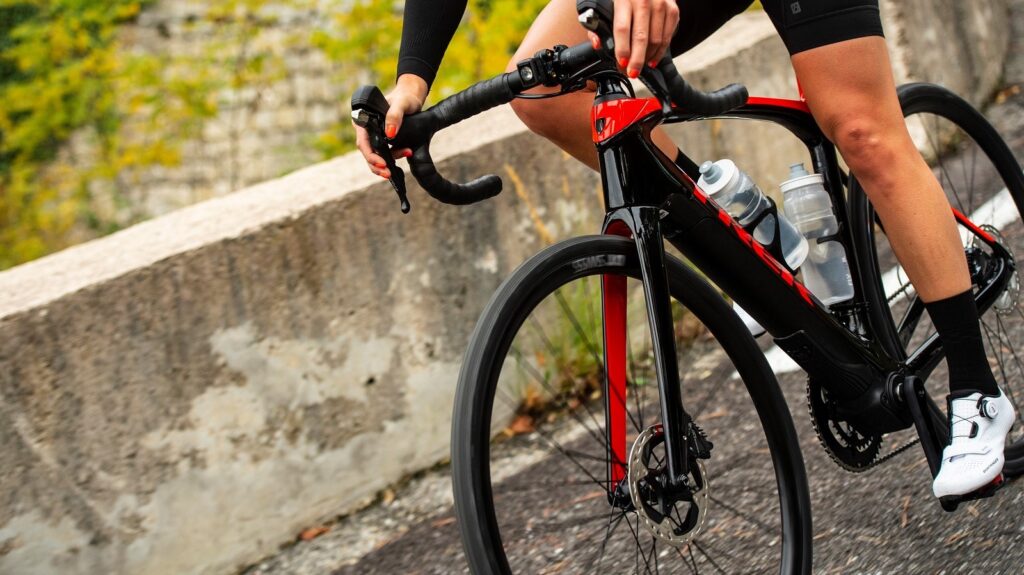
close up of a red and black Trek Domane plus bike

Trek Travel is proud to introduce a new fleet of electric-assist bikes, including the Trek Domane+ LT and Verve+. These bikes flatten hills, improve endurance, and make every ride a little more fun. There’s no reason not to love an electric-assist bike. But we can find at least ten reasons why you will:

[trek-fullwidth-img src=”https://trektravel.com/wp-content/uploads/2019/12/TrekDomaneplus_Oct2019_Nice_-940_1600x1000.jpg”]

1. Fall in love with two wheels.
We believe that bikes show a different perspective, and provide a more magical way to experience the world. Sometimes, that magic is lost in the struggle up a mountain. With electric-assist, you can ride further and see more of the world from the seat of a bike.

2. If you’re reading this, they’re built for you.
Young, old, avid or amateur, you’ll definitely enjoy a spin on an electric-assist bike.
It’s more fun than you think, and just the ticket to a perfect day on the bike.

3. It’s a workout, with just a little less work.
It’s called “electric-assist” because that’s what it is; a boost when you need it, and a bike when you don’t.
This isn’t a moped, and there’s no reason to feel guilty. It’s just another way to ride on your terms.

4. They’ll take you to the very best and back.
No longer are the greatest views and most satisfying stops reserved for the hard-core riders.
With electric-assist, you’ll see more summits, skylines and horizons that make every destination magical. You might even get there first.

5. They’re where the latest meet the greatest.
Simply put, nobody makes electric-assist bikes better than Trek.
With a longer-lasting battery, lighter-weight frame, and extra-stylish design, we’ve got those other bikes beat.

6. Grins are guaranteed.
We know they’re fun. We’ve been riding them at the Trek Travel headquarters for months now.
Yes, our guests love them. Yes, our guides love them. No, you can’t stuff one into your luggage.

7. They’re also built for the buddy system.
We introduced electric-assist bikes so travel partners of two speeds can ride together.
Because the best memories are shared, no matter the level of riding experience.

8. They’ve already taken the world by storm.
Electric-assist bikes are standard equipment in Europe, where locals zoom from work, to home and anywhere in-between.
And now they’re making a big entry into the U.S. market. If you’re riding one, you’ll fit in just fine.

9. They slay the mightiest hills.
To some guests, hills are half the fun. To others, they’re roadblocks to get to the next activity.
Luckily, electric-assist bikes can turn any mountain into a molehill. You’ll be surprised at how fast you can defy gravity.

10. They’ve got all the speed you need.
Now you won’t need to worry about gaps from the group, changes in pace, or if you want to stop for a photo opportunity.
Electric-assist bikes make it easy to stay with the Trek Travel tour at any speed. Watch how.

Don’t miss out:
They’re first-come, first-served, so act now. It’s the easiest way to electrify your experience.

Explore Electric Bike Trips

E-bike Tours

[trek-fullwidth-img src=”https://trektravel.com/wp-content/uploads/2019/12/Verve_Plus_4_Lowstep_20_30632_A_Alt1_1600x1000.png”]

Are Your Tires Too Worn?

As the road biking season winds down for many of us in the Northern Hemisphere, hopefully you’ve put more than a few miles on your bike this year. Now is a great time to check the condition of your tires, before you start riding over slick leaves or frost-covered pavement. Don’t wait until the beginning of next season, when you’ll be eager to get out on the road as quickly as possible.

As a tire wears, a few things happen. The nice round profile of the tire starts to flatten out. This is normal, but you want to change out that tire before it gets too thin. The thickness of the rubber is one of the properties that will help protect against flat tires. If it’s too thin, very small pieces of glass will puncture the tire.

Another thing to check out is the condition of the fabric. Yes, there is fabric in your tires. A lot of it, actually. Manufactures use different thickness cord for different quality tires. These cords can sometimes fail, resulting in a bulge or wobble in the tread. You will want to check the entire diameter of the tire for any wobbles and pull the tire from use if you find one.

Choosing a new tire can be a tedious process. If you want my recommendation, I love the Bontrager AW3 Hard Case 700X25c tire. It’s a fantastic tire with low rolling resistance and great puncture protection. It’s on all of our Trek Travel road bikes as well!

Trek Travel bike tire tips

How To Brake Into Corners

Safety is our first priority at Trek Travel. Our guides give a daily safety talk on trips, our entire fleet of bikes is equipped with the Bontrager Flare R tail light, and we always set a good example out on the road. In recent years we have observed that most crashes happen while riding through a corner, so we are here to provide you with the knowledge to prevent that from happening.

Bike Safety Tips: How to Brake into Corners
 
 
While our guides do everything in their power to keep your safe on the road, the majority of crashes happen when someone is riding too fast for the conditions and strongly applies the front brake. This results in the front wheel washing out and the rider landing on the pavement. It can happen very fast, but there are a few things that you can do to keep this from happening to you:

1. Perform the majority of your braking before you enter the corner. Brake before you turn. You want to slow your speed to the point you are comfortable leaning into the corner.

2. It is very important to ride in a predictable line, especially if you are in a group, so that people understand where you intend to go.

3. If you feel that you are riding too fast into a corner and need to slow down, it is best to straighten the bike and apply both brakes at the same time (with a little more braking power in the rear brake). But be sure to get back into the corner right away in order to keep from riding off the road!

4. Slippery conditions makes turning corners even more dangerous. Making sure to slow down more than normal while riding in the rain, and avoid riding over painted lines on the road. These lines can act like ice, and braking on ice typically ends with a crash.
 
 
Safety is the first priority on Trek Travel cycling vacations


N + Project One

How many bikes does a person really need? The old joke makes the answer a moving target: N + 1, with N being the number of bikes already stuffed into your garage. But would that equation be different if you built one bike, from the ground up, with the exact spec, color, gearing, and fit you want, without compromise? If you got to build your one bike?


That’s the idea behind Project One: build one bike at a time, for one rider at a time. A bike unlike all others. Every wish and whim considered. trek’s custom bike program was launched to the cycling world over ten years ago. It was a daring departure for a large bike manufacturer, allowing customers to specify their individual bike’s part and color. Upsetting our busy paint and production line was risky, and creating a custom shop alongside it was definitely a bold move–one that has since gained fans across the world.

Fast forward a decade, and ever-increasing demand has warranted a new $2 million paint lineat Trek that must be seen to be believed. Paint Manufacturing Engineer Bob Seibel has been researching paint plants for several years now, including custom paint lines at similar businesses like the Harley-Davidson Motor Company in nearby Milwaukee. Bob rides a Harley, and is always happy to visit the mother ship–but this time, the objective was to solidify plans for the best painting line in the industry. One of the first requirements he identified was the need for a specific and separate location for his crew of painters.
 
 
Design your own Project One bicycle on Trek Travel's Trek Factory Experience
 
 
“Before the new paint line, P1 painters never had their own space: it had always been shared with the mainline work, with custom stuff done on a second shift. Now we have a dedicated Project One paint facility; their own booths where they don’t have to close up, put away all their equipment at the end of the night only to have to take it all back out to start up the next day. Now they can just paint. They’re at home.”

But space was only the start. The real bottom line goal for the new paint booth was that we wanted to free up the artisan painters from the more technical and uncreative aspects of coatings. Changing colors, cleaning lines, painting undercoats. These things require more precision than artistry, so the new paint line is an amazing mix of technology and art, anchored by a high-tech, incredibly precise paint robot. The artists and the robot get along really well. We robotically cover the mundane tasks and keep our painters focused on the art, the beauty–the things that make Project One more than a paint job.

The frames that receive this artistry are molded from raw carbon just down the hall and up the stairs from the new paint line. There the raw carbon frames are bonded, cured, and checked for perfect alignment.

Only then can the finishing process begin. Frames are first sandblasted, then joints and bond lines are hand-sanded with care. Not a single speck of that sanding dust, Bob Seibel takes care to point out, will ever make its way into the paint booth.
 
 
Design your own custom Trek Bike on Trek Travel's Project One Factory Experience
 
 
Before painters enter the glass-walled booth, they don paper coveralls and pass through air showers and other contaminant removal methods to remove dust and impurities–the number one cause of paint imperfections–from all operators and frames that enter. Nothing gets in the way of a perfect finish.

“With Project One, the finishes are unbelievably meticulous. Take the U5 Vapor Coat. U5 stands for under five grams. Literally less than five grams of finished paint is applied to the frame before it’s done. A typical paint weight of a frame is easily 100 grams, if not more, because your sole focus is a smooth, flawless finish. But here we’re talking five grams or less for a paint finish, that’s astounding–it’s nothing! There is absolutely no margin for error–the coating can’t hide anything. Part of it is sandblasted, to have a matte feel and look, and the other parts are contrasted. It’s a really special look.”

Which is the whole point of Project One. We like to do special things here. Often it’s for one of the great athletes who ride Trek. Project One graphic designer Brian Lindstrom recently completed a special bike for Jens Voigt.

“Jens is very cool to work with. He had a lot of great ideas about what he wanted. We sat down in a cafe in Berlin and he started sketching ideas that he had, all the different milestones that he wanted to include on the bike that we could work on. The result was a design that reflected points in his career, so it was cool that, as fans, we can thank him for it.

I love doing athlete bikes–or it could be an entire identity for a new team, like for Trek Factory Racing: design the logo, get it all out there, color them up.”
 
 
Design your own Project One bicycle on Trek Travel's Trek Factory Experience
 
 
Rarer than the athlete bikes are the fully custom civilian jobs, only endeavored when the custom queue is uncharacteristically short and the budget necessarily long. Take the skeletal bike the Project One team created for an orthopedic surgeon in New York. The doctor was a triathlete, and wanted the full custom treatment for his Speed Concept. Project One Guru (yes, that’s his title) Eric Maves recalls:

“We played off the fact that he was an orthopedic surgeon. He wanted a skeletal-type paint scheme on the bike. His main job is doing artificial joints, so he somehow wanted to integrate those into the skeletal system. I had this idea: what if we made it like an X-ray? We used the X-rays of the son of one of our painters as our benchmark. Artificial joints show up on an X-ray completely different from bone, so we went for that effect on the piece. It was intense, like 40 hours of paint labor alone. He was blown away.”
 
 
Design your own custom bicycle on Trek Travel's Project One Factory Experience
 
 
Dave Schleicher is the Project One engineering technician. Dave takes Brian’s and Eric’s ideas and works out how to make them happen, which techniques to use, how to make vinyls for masking the frame for painting. In the case of complicated projects like the skeleton, this often means some clever sideway thinking.

“I had to go find an actual skull, and live-trace right off the skull–that was just crazy. We went to the University of Wisconsin and came up with all the drawings for the vertebrae, and I had to hand-trace them, label them, and match where they lined up. For the hips, the human ones weren’t working, so we had to use an X-ray from a dog’s hip!”

Dave is lost in folders and files on his desktop. The last ten years of special paint finishes and graphics flashes on the screen. The attention to detail, the complex engineering that turns a concept into a paint scheme, is extraordinary. And once the art and makes are complete, it’s up to the painter to bring the design to life on its carbon canvas.
 
 
Design your own Project One bicycle on Trek Travel's Trek Factory Experience
 
 
“It’s sort of a layering technique. It’s a very artistic interpretation, the masks aren’t meant to be a schematic. Every time we develop a new design, we save the files, just because we might use some of it on another project. We’ve done a snake head, we have skulls…John Burke, Trek’s President, gave his wife a panda design bike, so we’ve got that. There we go, pandas!”

The same meticulous airbrushing used for the rare one-offs also applies to the Project One Signature Series schemes. Applying the Real Fire scheme to tubes and fork ends is around nine hours of work, all done by a single painter. Each Signature Series frame belongs to one artist, from start to finish, who signs his work at the end. Bob explains:

“We take it personally, because we know that one person has ordered this one frameset, this one bike. The frame already has an owner, written right on the tag. That owner is a person, someone who’s created this expression in the form of a bike. We build it and sign it, from one person to another–it’s tough to get more personal than that.”
 
 
Design your own Project One bicycle on Trek Travel's Trek Factory Experience
 
 
BUILD YOUR ONE BIKE ON THE TREK FACTORY EXPERIENCE»
When To Replace A Bike Helmet

When is the last time you bought yourself something nice that can also save your life? If it’s been more than 3-5 years since you bought a new bike helmet, then do yourself a favor and don’t wait any longer. Most helmets have a manufacturer recommended lifespan of 3-5 years, even if it has never been in a crash.

Helmet technology is almost as amazing as smart phone technology. Advancements in design, weight, retention systems, cooling and fit have come an incredibly long way in the past few years. Every time I purchase a new helmet, I ask myself how they possibly improved the fit and technology so much when I thought my last helmet was perfect!

Purchasing a new helmet is also a great opportunity to make sure it fits properly. The safety of your helmet relies on the adjustment of its straps. It is important to make sure the strap buckles fit right below your ears and the chin strap isn’t too loose. My rule of thumb: always err on the side of caution. If you can’t remember when you purchased your helmet, stop into a local bicycle dealer and get fit for a new one. Your safety and security is worth the price.

So. Many. Choices.

Wear a Bontrager bicycle helmet on your Trek Travel cycling vacation


Why I Ride: Jane Burns

This is the story of my journey from a non-rider to a cyclist extraordinaire.

Act One:

At age 44 I took my first bike trip in Europe. Actually, it was my first bike trip ever and first time on a bike in Europe. The Trek Travel trip was not in the Loire Valley in France or through the tulip fields of Holland (which are relatively flat), but in the hills of Italy! In Tuscany we were either riding up to a “hill town” or downhill, on our way to go up another hill, to another town. I did not even own a road bike at the time. I trained for the trip on a hybrid with flat pedals, and that is the bike I rode on the trip. I didn’t even own a pair of cycling shorts!

The first afternoon was designed to stretch our legs, and this found me riding alone as the last rider of the group. I was talking out loud at the imagined version of my husband, a long-time avid cyclist, in front of me. The one-sided conversation went something like this: “What am I doing here? These are mountains not hills! People are on this trip training for the Iron Man qualifying event in Madison! There are former amateur and pro riders on this trip! What were you thinking bringing me!”

Everyone on the trip was supportive and encouraging to those of us who were not experienced riders – specially the Trek Travel guides. The three female guides changed my life. These three wonderful ladies encouraged me to ride at my own pace, to challenge myself, and were always willing to ride with me no matter how slow. I listened to their parting words at the end of the trip: “ Don’t give up cycling.”
 
 
Trek Travel guests cycle at all paces


Act Two:

I took those words to heart. I am fortunate to have a husband who is patient and loves cycling more than any other activity. He helped me move forward in my equipment choices from hybrid, to a Women’s Specific Design road bike, and now to a Trek Madone (like going from a pony to a Thoroughbred Horse). I moved from regular pedals, to mountain bike pedals, and now to road bike clip-in pedals. I now own cycling shorts too!
 
 
Meet Trek Travel guest Jane Burns and find out why she rides bikes


Act Three:

At age 55, I now have five Trek Travel trips checked off my long wish list including Adelaide, Australia, Napa Valley, California, and Dordogne, France. By taking the guides’ words to heart, not only has my cycling improved, but so have so many parts of my life. I decided to start pilates three years ago to improve my cycling and this happened along with my overall strength, balance and flexibility. I have a confidence on the bike that has allowed me to ride in foreign countries, like Japan. My health has improved and my weight has dropped. I moved to downtown Madison, Wisconsin and use a bike as part of my daily transportation. I use my ability to ride longer distances to raise money for charity.

I don’t know what Act 4 has in store for me, but I will always have the Trek Travel guides’ words in my heart as I travel down the road on my bike.
 
 
Trek Travel welcomes riders of all abilities

Watch our Guest Story video about Jane Burns»

How To Adjust Bike Shifting

If you’ve been on the bike a lot since your spring tune-up, it’s probably time to readjust your shifting. For go-getters who want to tackle this project themselves, here are a few pointers:

For every click of your rear derailleur shifter, the derailleur should move the chain one complete gear change. Start with the chain in the smallest cog. If you click your shifter to move the chain up to the next largest cog on the rear and it does not go up or hesitates before moving, you need to tighten your cable tension. You can do this with the barrel adjuster that is built into either your shifter or derailleur. As you turn the barrel adjuster counter-clockwise, it screws the adjuster out taking up slack in the cable tension. This results in moving the derailleur a little further.

Pro Tip: A little bit can go a long way! Start with ¼ turns only and try the shifting again. Keep trying ¼ turns until you have it just right.

There are a few screws on the derailleur that will be tempting to adjust. Don’t! These are already adjusted to their positions to stop the derailleur from shifting the chain into the spokes and into the frame on the two most extreme gears. They only provide stopping points for the derailleur, they do not adjust the derailleur.

One thing to note. If you just can’t seem to get the shifting right, there is the possibility that the part of the frame that the rear derailleur is mounted to could be bent. This is called the derailleur hanger. Telltale signs are scrapes on your derailleur or if your bike tipped over onto its drive train side. Some are replaceable and some are not. If this is bent, there is nothing you can do to the cable tension that will help your adjustment. Go to your local bike store to get a professional opinion on your options. If you do have a replaceable hanger, it is good to get a couple as spares. Keep one in your seat bag just in case you need to do an on-the-road repair.
 
 
Learn how to adjust your bike shifting with Trek Travel


Private

If a date is marked as Private, it is reserved for a private group.

Don’t see exactly what you are looking for or looking for a custom date?
Call our trip consultants at 866-464-8735

What is the Difference?

Luxury:

Enjoy luxurious accommodations handpicked for a refined experience. From signature spa treatments to special dining moments, you’ll be more than provided for— you’ll be pampered.

Explorer:

These handpicked hotels provide relaxation and fun in a casual and comfortable environment. Delicious cuisine and great service mix perfectly for a memorable stay.

Combined:

On select cycling vacations, you’ll stay at a mix of Explorer and Luxury hotels. Rest assured, no matter which hotel level you’re at, our trip designers carefully select every accommodation.

Activity Levels

Level 1:

Road: 1-3 hours of riding. Up to 25 mi (40 km). Up to 1,000 ft (300 m).

Gravel: 1-3 hours of riding. Up to 20 mi (35 km). Up to 1,000 ft (300 m).

Hiking: 1-3 hours of hiking. Up to 5 mi (8 km). Up to 1,000 ft (300 m).

Level 2:

Road: 2-4 hours of riding. 20-35 mi (35-60 km). Up to 2,500 ft (750 m).

Gravel: 2-4 hours of riding. 15-30 mi (25-45 km). Up to 2,000 ft (300 m).

Hiking: 2-4 hours of hiking. 4-8 mi (6-12 km). Up to 1,500 ft (450 m).

Level 3:

Road: 3-5 hours of riding. 25-55 mi (40-85 km). Up to 4,500 ft (1,500 m).

Gravel: 3-5 hours of riding. 20-40 mi (35-60 km). Up to 3,000 ft (900 m).

Hiking: 3-5 hours of hiking. 6-10 mi (9-16 km). Up to 2,000 ft (600 m).

Level 4:

Road: 4+ hours of riding. 40-70 mi (60-110 km). Up to 8,000 ft (2,400 m).

Gravel: 4+ hours of riding. 30-50 mi (45-80 km). Up to 4,000 ft (1,200 m).

Hiking: 4+ hours of hiking. 7-15 mi (11-24 km). Up to 4,000 ft (1,200 m).

What are your trip styles?

Classic Bike:

Explore beautiful destinations with a curated blend of guided activities, local cuisine, handpicked accommodations, and itineraries to suit every traveler, from laid-back adventures to luxurious escapes.

Gravel:

Venture off the beaten path to unforgettable places, with fully-supported routes that combine gravel and paved roads in classic Trek Travel style.

Cross Country:

Tackle an epic adventure that takes you point-to-point across mountains, countryside, and more.

Pro Race:

See the pros in action at the biggest cycling events of the year.

Hiking & Walking:

Step into adventure with carefully designed routes, unparalleled hospitality, and deep-routed local connections.

Ride Camp:

Train like the pros in some of their favorite riding destinations.

Self-Guided:

Enjoy a bike tour on your schedule with just your chosen travel companions.

Single Occupancy

Sometimes it’s more convenient and comfortable to have your own room while on vacation. We understand and that’s why we offer a Single Occupancy option. The additional price guarantees a private room all to yourself