You are working on Staging
Sustainability - Trek Travel

2024 Sustainability Impact Report

In 2023, partnership with carbon consultant ecollective, Trek Travel completed our first greenhouse gas emissions inventory. This was a critical first step in relaunching our sustainability work in the post-Covid era, because in order to address our impact in a meaningful way, we first needed to understand it. The 2023 numbers established our baseline, which we will work to improve upon year after year. The inventory covered all aspects of our business: from headquarters emissions and staff travel to merchandise and purchased goods, our website, virtual and in-person events, customer travel to our trips and all on-trip elements such as transportation, hotels, food, guide housing and activities. It was conducted following GHG Protocol guidance—if you are interested in reading more about this process, you can check out the methodology details here.  
2023 Numbers at a Glance: 

Average 2023 carbon footprint per guest per day excluding guest travel (kg CO2e): 48 kg 
Average 2023 carbon footprint per guest per day including guest travel (kg CO2e): 443 kg 

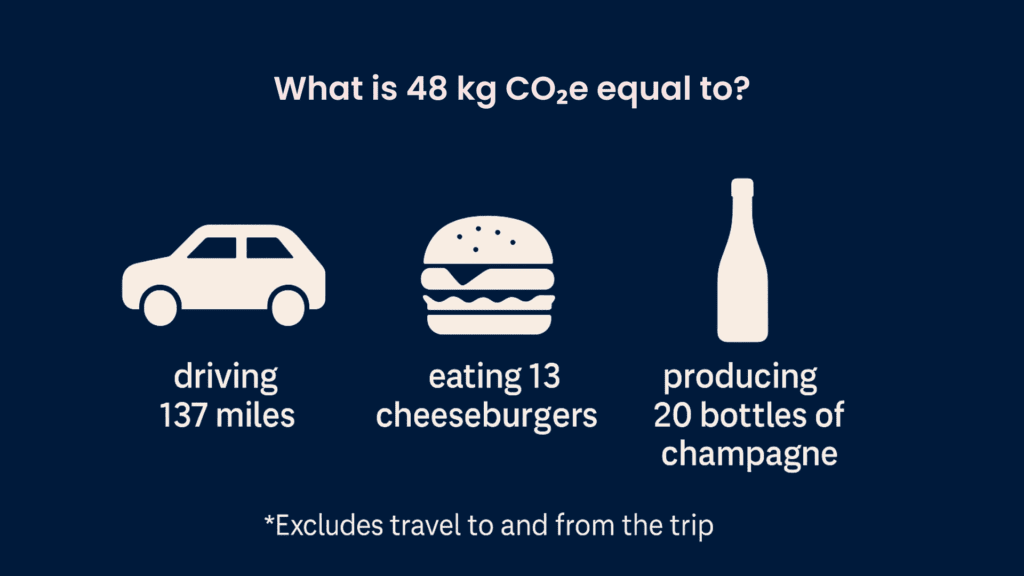
Carbon footprints can be hard to visualize. Using our 2023 results of 48 kg CO₂e per guest per day (excluding travel to and from the trip) we offer a few comparisons below. Whilst our score is lower than other vacations (Maldives trips average 97 kg CO₂e/customer/day and ocean cruises 297 kg CO₂e/customer/day) our emissions still matter and must be reduced. 
To this end, in 2024 we focused our efforts on a variety of projects that included every department at Trek Travel. We moved more of our warehouse spaces onto green energy. The Guide Department worked to make our guide schedule more efficient, thus reducing the staff travel required between regions. Our Guide and Guest Experience teams started evaluating all guest and guide clothing with the aim of switching to recycled materials. Our guest packets, which our guests in the mail before their trip, will now include recycled packaging materials. Trek Travel water bottles were transitioned to plant-based materials, and day bags were transitioned to recycled materials. And of course, both of these items are reusable in daily life! We maintain our vehicle and bike fleets to last for multiple years, so our purchased goods were down in 2024 and more guests chose lower-emissions trips that were based from a single hotel and required less guest and luggage transportation.

Our logistic team implemented a new tire and tube recycling program in the US. We also carefully considered how to, in the future, incorporate electric vehicles into our fleet. We moved into a more modern and efficient warehouse space in our hometown of Madison, Wisconsin and collected more data on our global guide house emissions.

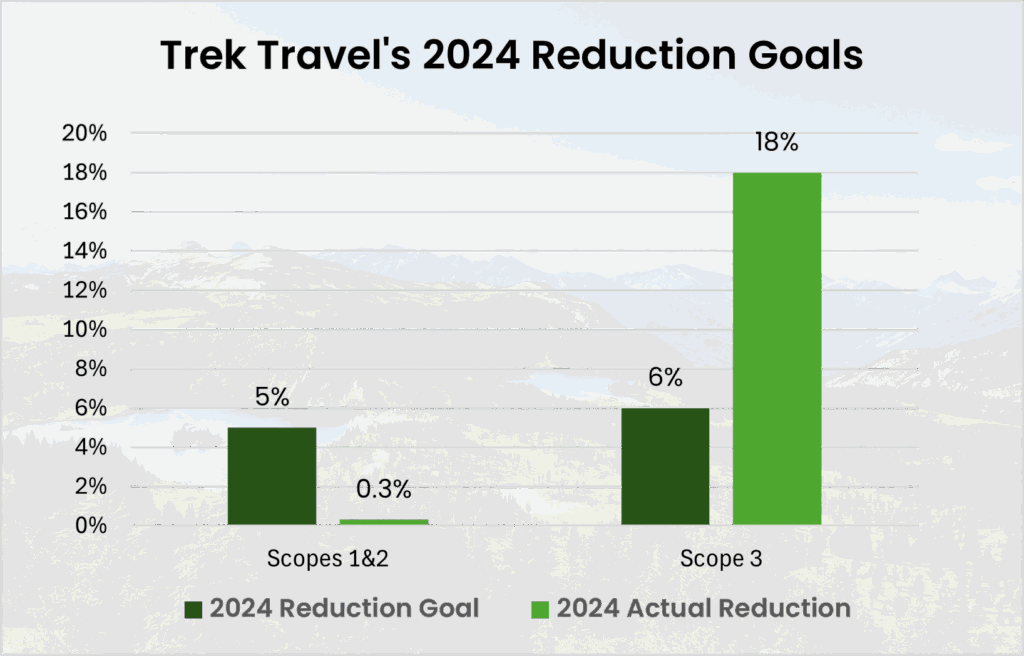
With guidance from ecollective and a set of reduction actions up our sleeves, we set our 2024 targets: a 5% cut in total Scope 1 & 2 emissions and a 6% cut in per guest per day Scope 3 emissions (see here for a brief explanation of the Scopes, which are part of any carbon analysis. Our Scope 1 & 2 reduction goal is based on our “absolute,” or total emissions in these categories. Our Scope 3 reduction goal is an “intensity target,” because it is based on emissions per guest per day. (This follows the current GHG Protocols and guidance)  
2024 GHG Emissions Results

In early 2024, we completed our 2nd annual GHG emissions inventory with ecollective. Our reduction goal for 2024 for Scopes 1&2 was 5% (this was an absolute, or total emissions, reduction goal). 2024 Scope 1 & 2 reduction: 0.3%

Our reduction goal for 2024 for Scope 3 was 6% (this goal was an intensity target, based on the emissions per guest per day). 2024 Scope 3 reduction: 18%

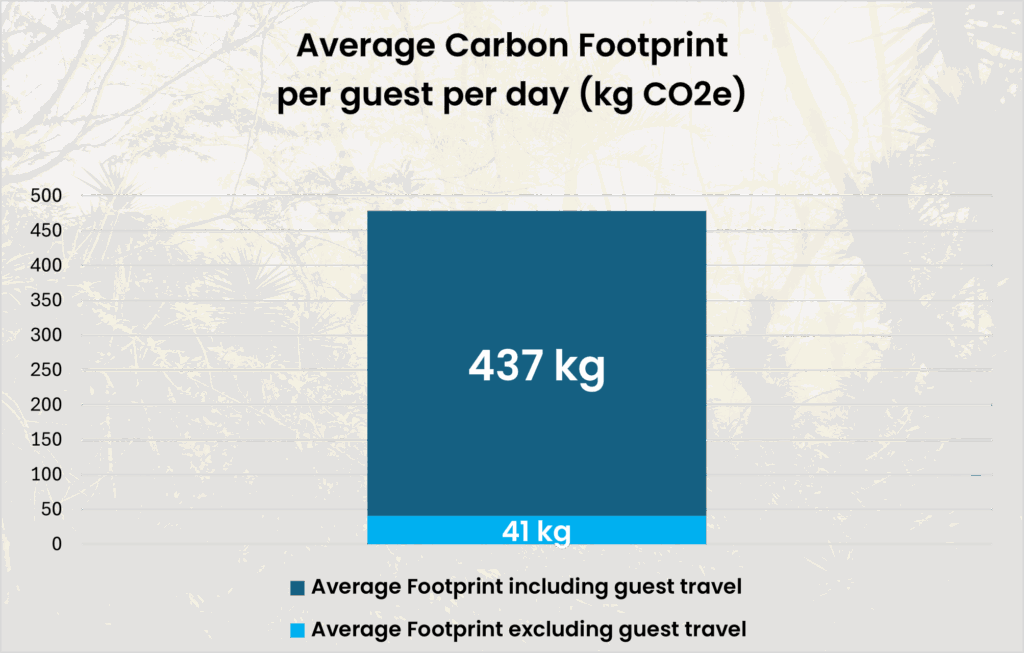
Average 2024 carbon footprint per guest per day excluding guest travel (kg CO2e): 41 kg. Average 2024 carbon footprint per guest per day including guest travel (kg CO2e): 437 kg
Progress and Perspective

Our overall per guest per day emissions decreased in 2024 and even more impressively, so did our total emissions (excluding guest travel) despite hosting significantly more guests than the preceding year. That’s a milestone we’re proud of. We missed our absolute Scope 1 & 2 reduction goal however, due to a small increase in vehicle emissions due to running more trips. We await progress in the electric passenger van market as well as electric vehicle charging infrastructure in order to directly address these emissions. We’re encouraged by our overall progress but know Net Zero is a journey and we are just getting started. We’ll continue to work to reduce our footprint each year. Some years we’ll hit our targets, some we may not, but we’re committed to transparency every step of the way so we can share what we learn as we work toward lower carbon travel. 

Guest Travel Emissions

As part of our carbon footprint analysis, ecollective estimated the emissions from guest travel to and from our trips. While we include this in some reporting, we exclude it from the Scope 3 emissions tied to our reduction targets. Why? These emissions are hard to track accurately—Trek Travel doesn’t book guest travel—and even harder to control. That said, they represent a major part of travel’s climate impact, and we won’t ignore them. We can encourage behavior change that will bring these emissions down–on our webpage you’ll find some recommendations for ways to cut down on the emissions related to your travel. We are also evaluating future investments in Sustainable Aviation Fuel—more on this in a future report.
What’s next? 2025 Carbon Reduction Goals and Projects

Greenhouse Gas Emissions reduction goals for 2025: Scopes 1&2: 4% overall reduction goal
Scope 3: 6% per guest per day reduction goal

These are some of the projects we plan to undertake to reach these goals:

  • Purchase fully renewable electricity for the Madison Warehouse.
  • In partnership with ecollective, we plan to implement a Hotel Energy Survey, which will enable us to vet new hotels for their sustainability efforts and will provide feedback to our current partners for ways they can lower their emissions. This is critical, as Trek Travel is unable to finance or force our hotel partners to reduce their emissions, but clear information will help us make decisions and help our partners reach their emission reduction goals. These emissions savings will be realized year after year.
  • We will continue pursuing our mission to have an environmentally friendly version of all guest consumable items and gifts.
  • In partnership with ecollective, we will conduct a summer training session with our Trip Design Team for designing lower emission trips.
  • We will host an internal training for all staff on personal carbon footprint reduction, conducted by our in-house Sustainability Program Manager and our friends at Trek Bikes.
  • Implement a tire/tube recycling program for our European operations.

We do not have all the answers, and the travel industry faces many challenges on the road to Net Zero, but we believe it is important to do what we can to reduce our impact year after year. We will update our webpage and issue an Impact Report annually to keep you informed of our plans and methodology.

Have an idea for how we can reduce emissions? Get in touch at sustainability@trektravel.com. We hope you’ll join us on this important journey to help protect the special places and communities that make travel meaningful and worthwhile.
How Trek Travel’s Green Miles Program Is Helping Employees Go Green (and Earn Money)

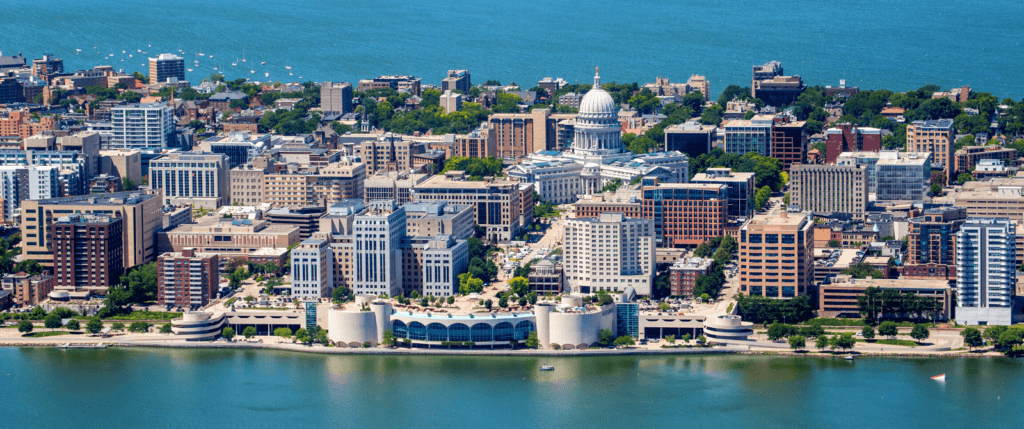
Aerial view of Madison, Wisconsin and the two lakes

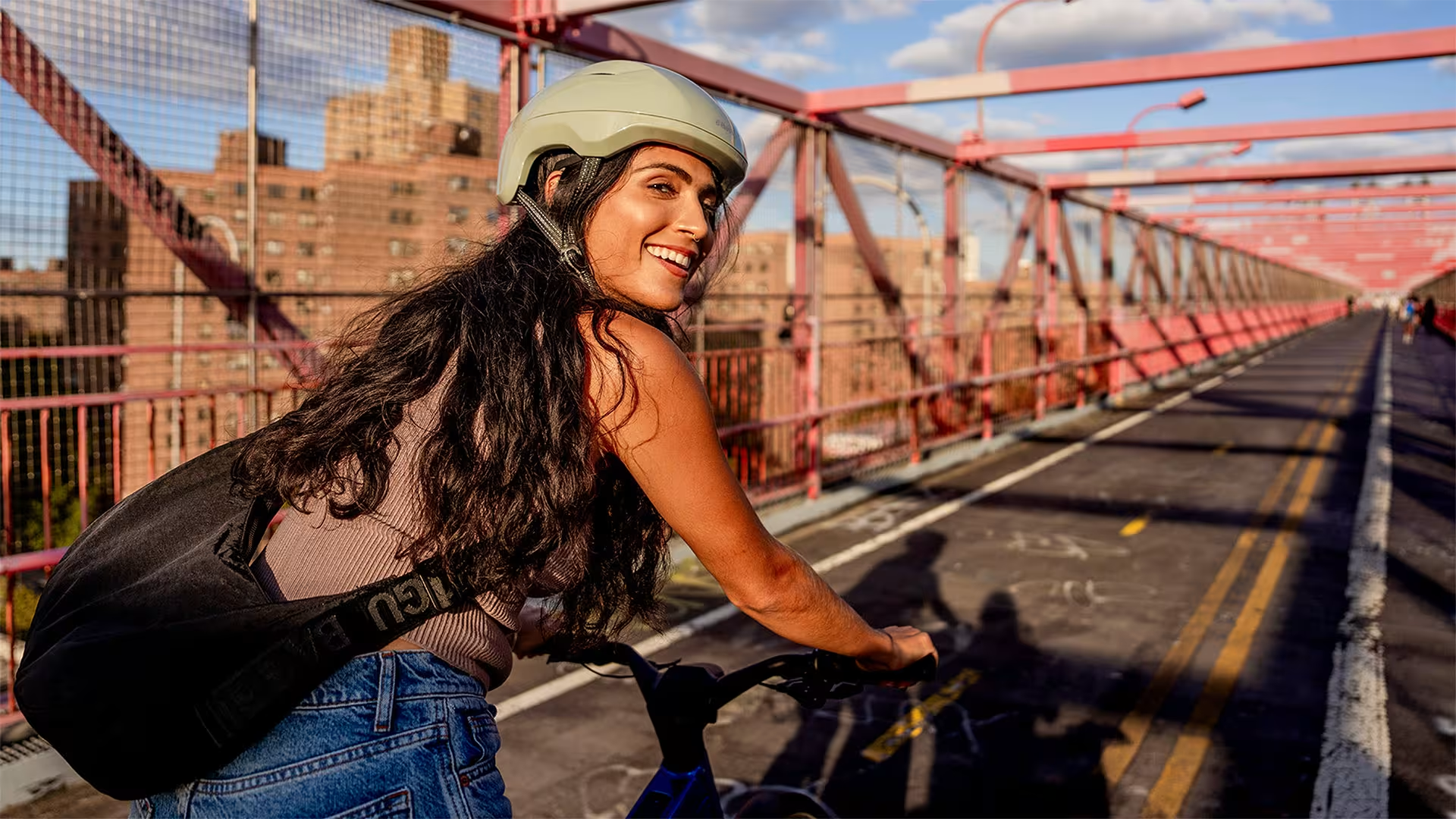
At Trek Travel, we believe that sustainability isn’t just about the products we use and the experiences we create—it’s about the lifestyle choices we promote. That’s why we introduced the Green Miles Program, an initiative that rewards employees for cycling or walking to work. This program not only helps us reduce our carbon footprint but also encourages healthier, more eco-conscious commuting.

What is the Green Miles Program?

The Green Miles Program rewards employees for the miles they commute by bike or on foot. It’s as simple as logging the miles you walk or ride to work, and at the end of the year, employees are rewarded with a bonus based on the number of miles they’ve accumulated.

The total Green Miles fund is set up each year and the amount is divided among the participants based on the miles logged. The more miles you ride or walk, the bigger the reward. This program is a win-win for everyone: employees stay healthier, save money, and contribute to reducing carbon emissions.

The Impact of Green Miles: Reducing Carbon Emissions and Inspiring Healthier Lifestyles

Since its launch in 2009, the Green Miles Program has helped Trek Travel employees rack up an impressive 50,700 commuter miles by bike and foot—saving an estimated 17,000 kg of CO2 emissions from entering the atmosphere. That’s a significant environmental contribution, achieved by simply swapping a car ride for a bike ride or walk.

In 2023, employees biked and walked 4,665 miles, and 3,203 miles were logged in 2024. So far in 2025, approximately 2,700 Green Miles have been logged. With every mile, not only do employees earn money but they also contribute to a healthier planet.

Ride your Bike and Track your Impact

The Sustainability team at Trek Bikes estimates that replacing several hundred miles of driving with riding will offset the carbon that was emitted during the manufacture of your bike. With Trek’s Ride Club App you can track your car replacement rides to see your carbon savings add up, knowing that with each ride you are helping to minimize your own personal carbon footprint. This is one of the powers of cycling: every time you ride, you’re directly contributing to a more sustainable lifestyle.

Why Choose the Green Miles Program?

For our employees, the Green Miles Program isn’t just about earning money—though that’s a nice bonus! It’s about making a small difference in the fight against climate change. By cycling to work, Trek Travel employees reduce their dependence on cars, save money on commuting costs, and stay healthier by incorporating physical activity into their daily routine.

Think a Green Miles Program could work for your business? We would love to hear from you! One of the primary reasons we share about our sustainability work is to encourage our customers and other businesses to join us in our mission. If you’d like more information about how to get a Green Miles program started at your organization please email us at sustainability@trektravel.com and we’d be happy to help.

Join Trek Travel in Cycling Toward a More Sustainable Future

At Trek Travel, we’re not just about creating great cycling experiences—we’re committed to making cycling a part of a sustainable, eco-friendly lifestyle. Join us as we continue to work toward a greener future, one pedal stroke at a time.

Want to learn more about Trek Travel’s sustainability program? Check out our Sustainability Landing Page or explore our 2024 Impact Report for more information on our ongoing efforts to reduce our environmental footprint.

Investing in a More Sustainable Future: Trek Travel’s Partnership with Klimate

At Trek Travel, sustainability is more than just a buzzword. It’s a consideration in everything we do—from the routes we create to the partnerships we foster. As part of our ongoing efforts to combat climate change, we’ve partnered with Klimate, an organization that empowers businesses to invest in high-quality carbon removal projects with confidence. Through this partnership, we are actively supporting projects that remove carbon from the atmosphere and store it long-term.

Klimate has helped us connect with carbon removal technologies that align with Trek Travel’s sustainability goals. These projects outlined below represent some of the most promising and verifiable solutions for carbon sequestration, and we’re proud to contribute to these projects in a small way in 2025.

Carbon Removal Projects: Making a Real Difference

InPlanet: Accelerating Carbon Removal Through Enhanced Rock Weathering

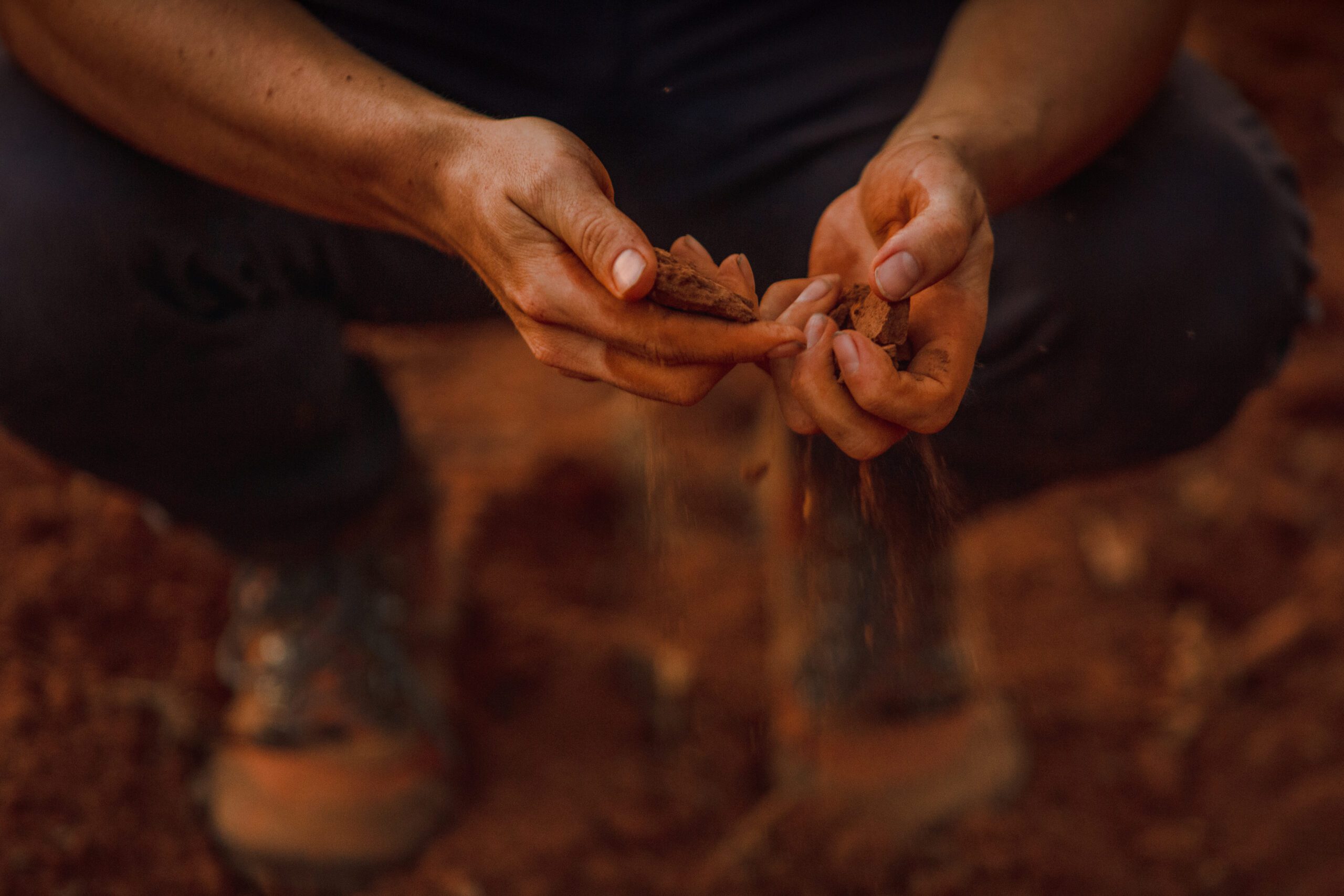
One of the most innovative projects we’re supporting is InPlanet, which focuses on Enhanced Rock Weathering (ERW). This technique accelerates a natural process of carbon removal from the atmosphere by grinding and spreading rocks on agricultural land. The process stores CO₂ in minerals in soil, creating a permanent solution for carbon sequestration. In addition to carbon removal, ERW improves soil quality, boosts agriculture’s resilience to climate impacts like drought, and provides benefits for local ecosystems.

Charm Industrial: A Revolutionary Approach to Bio-Oil Carbon Storage

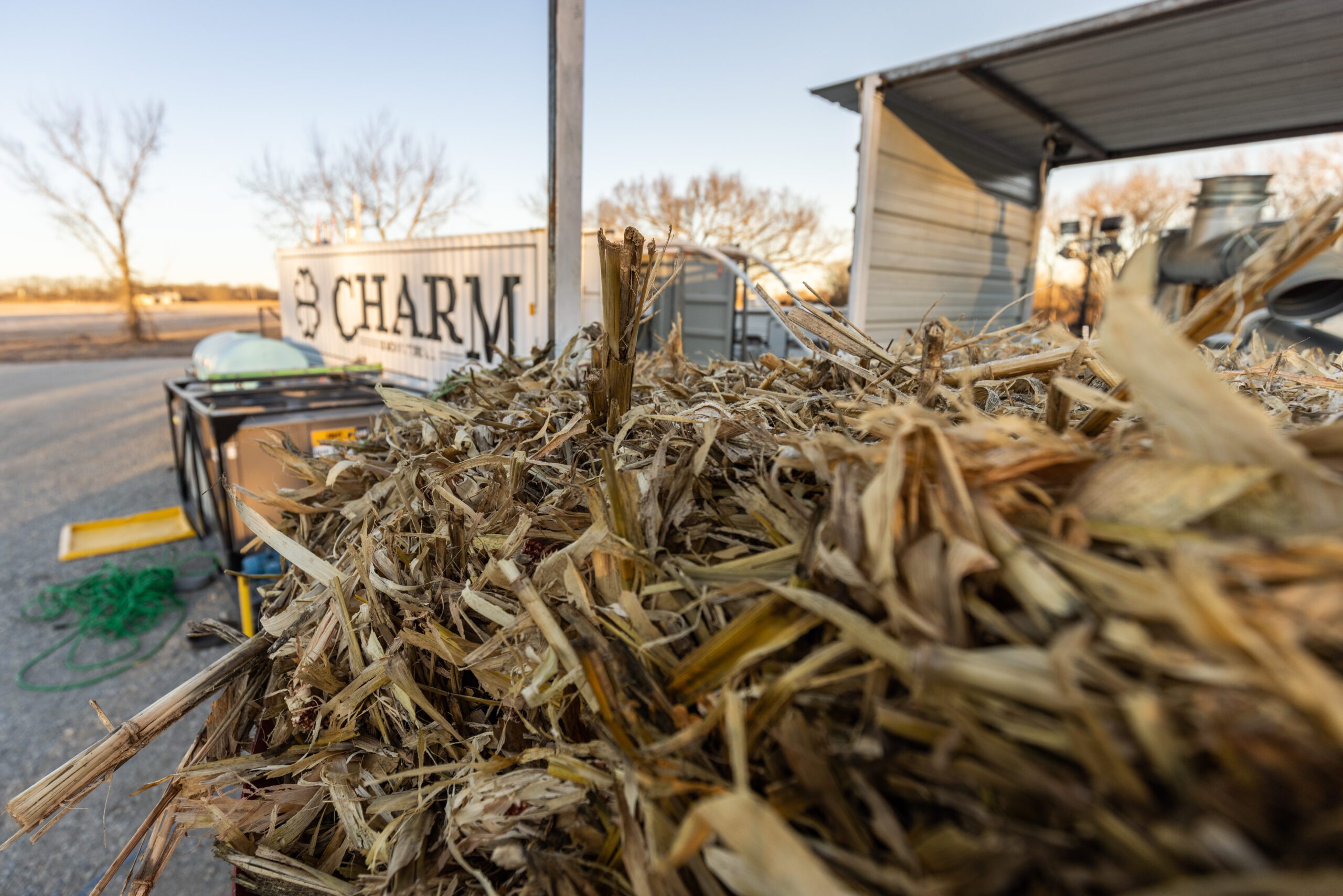
Charm Industrial offers a unique method for carbon removal through bio-oil, created by converting waste biomass into a carbon-rich liquid via fast pyrolysis. The bio-oil is then injected deep into underground rock formations, where it solidifies and remains stored for millennia. This method ensures carbon permanence for over 1,000 years, making it a long-lasting solution to mitigating climate change.

Charm Industrial also uses waste biomass from wildfire-thinning projects, turning potential environmental hazards into a valuable resource. By supporting this project, Trek Travel helps address the growing threat of wildfires while removing carbon from the atmosphere for the long term.

Carbuna: Unlocking the Potential of Biochar for Climate Solutions

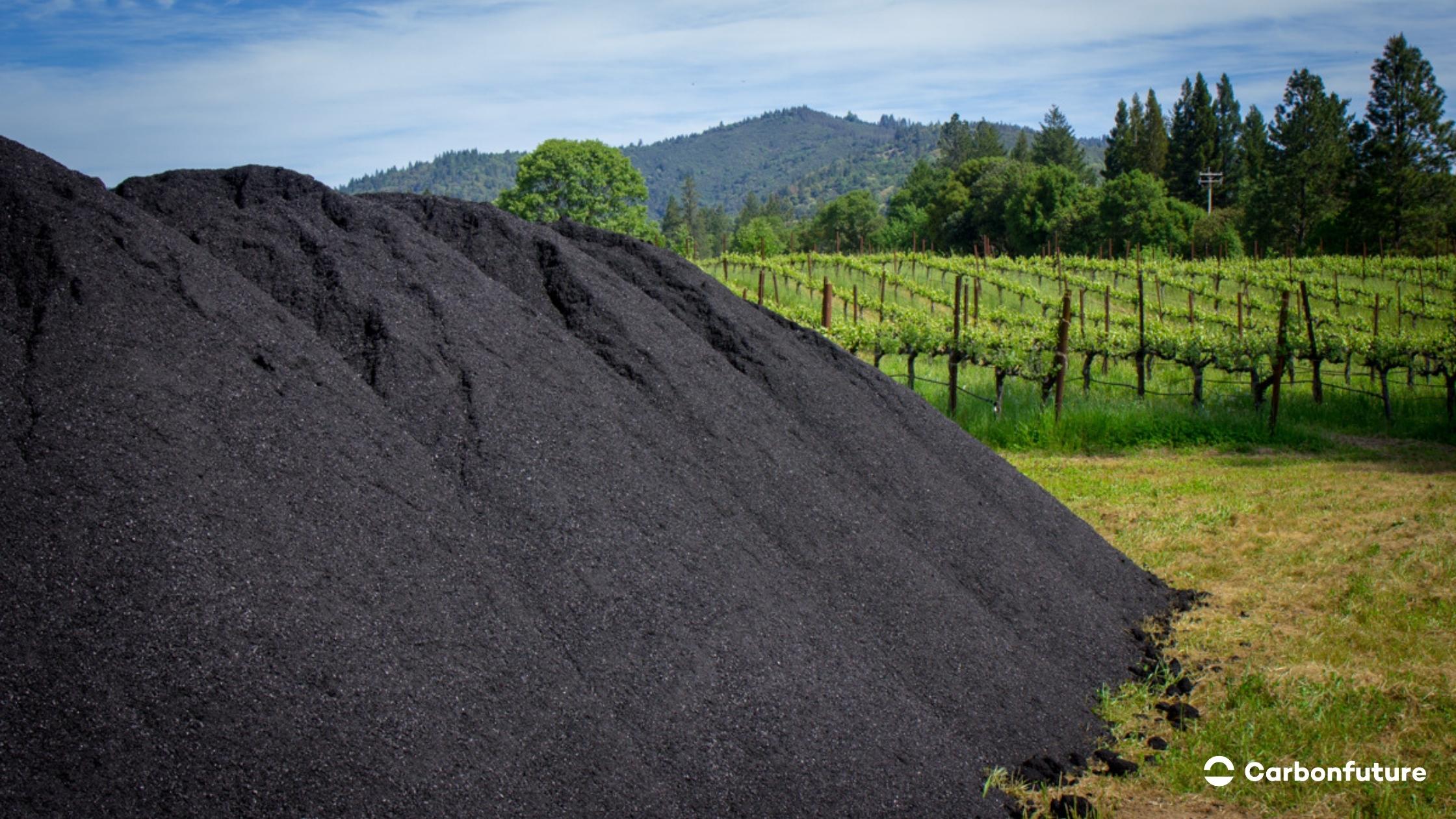
Another impactful project we’re involved with is Carbuna, which focuses on biochar, a carbon-negative product created by heating organic material in the absence of oxygen. Biochar has many applications, from improving soil health to being used in building materials that store carbon. Carbuna’s products are climate-positive, and the company has been a pioneer in the biochar industry.

What makes this project even more exciting is its ability to scale. Carbuna works with a network of biochar producers and has its own production technology, which allows for rapid expansion of biochar use across agriculture and construction sectors. By investing in Carbuna, Trek Travel is supporting an industry that has the potential to drive real, widespread change in both the agricultural and building sectors.

Andes Microbial Carbon Mineralization: Accelerating Carbon Storage in Soils

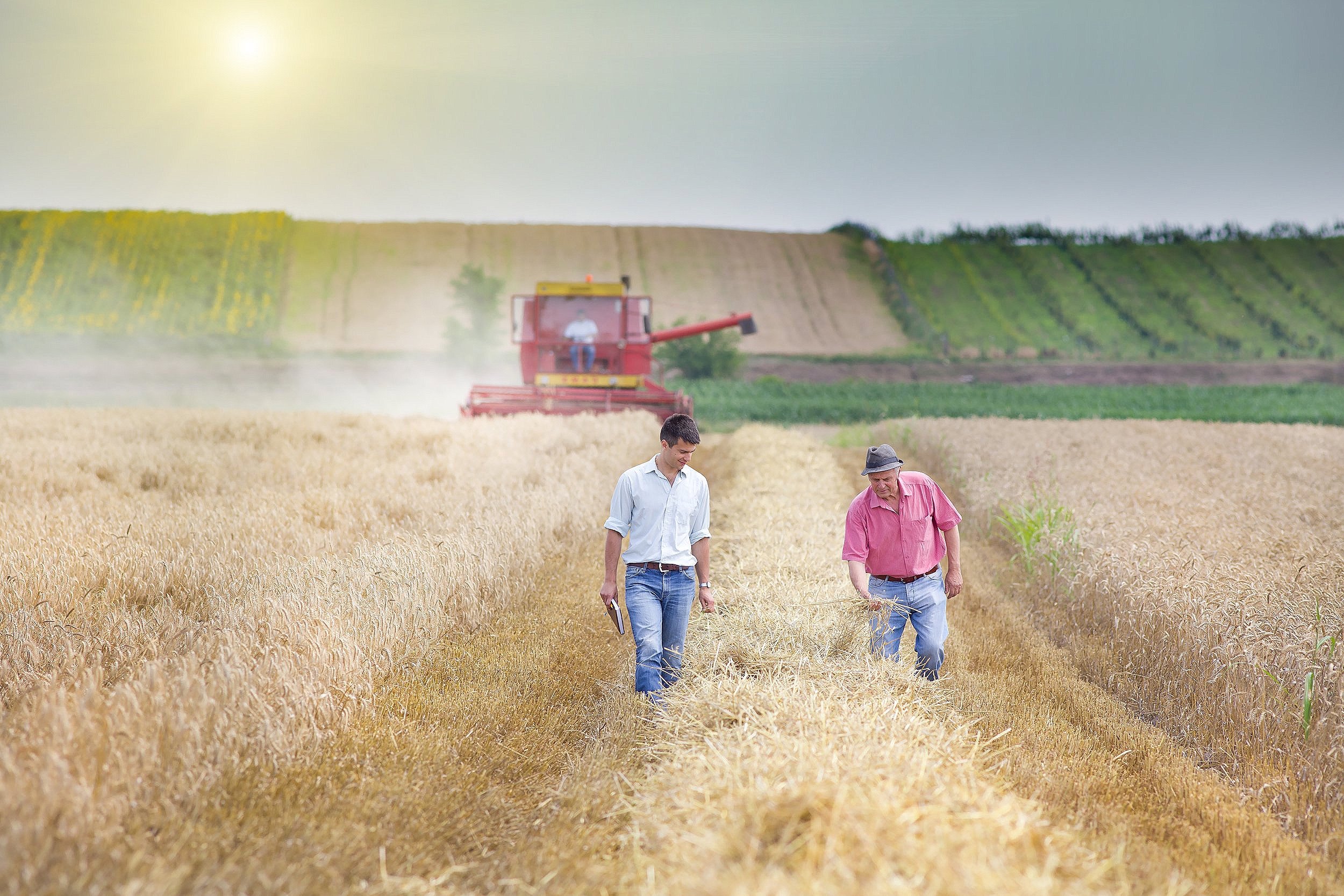
In the US Midwest, Andes Microbial Carbon Mineralization is partnering with farmers to apply microorganisms alongside crop seeds. These microbes accelerate the natural process of mineralizing CO₂ in soil, turning atmospheric carbon into stable minerals. This project is highly scalable and could be implemented across agricultural lands globally.

The benefits go beyond just carbon removal. The microbes also improve plant health by increasing nutrient availability, strengthening soil structure, and improving water retention. This method is a great example of how climate action can go hand-in-hand with agricultural productivity, making it a win-win for farmers and the environment, right in Trek Travel’s midwestern backyard.

Join Us in the Fight Against Climate Change

Trek Travel believes that every trip should contribute to the well-being of the planet in as many ways as possible. As we continue to create memorable cycling and hiking experiences for our guests, we are committed to finding new ways to integrate sustainability into everything we do. From supporting carbon removal projects to incorporating eco-friendly practices on our trips, we are dedicated to reducing our environmental impact and making the world a better place for future generations. We invite you to join us on this journey and help make a difference.

The Trek Voda Bio Water Bottle: A Step Toward a Greener Future in Cycling

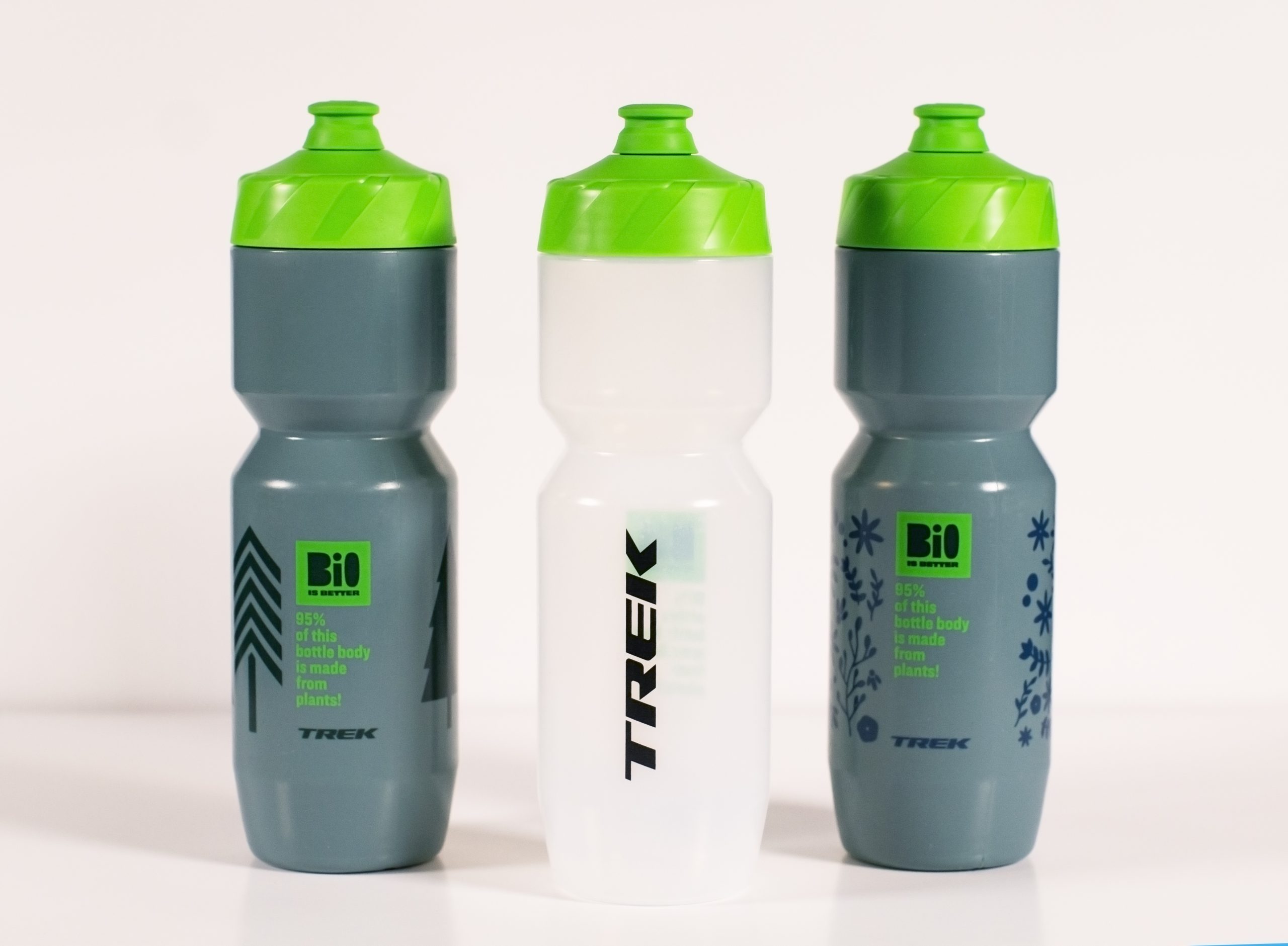
At Trek Travel, we’re committed to making cycling more sustainable, and the introduction of the Trek Voda Bio Water Bottle is a noteworthy part of that effort. Included on all of our North American trips, with a similar plant-based bottle provided on our European tours, the Voda Bio bottle helps Trek Travel reduce our environmental impact.

A Greener Choice for Cyclists

The body of the Voda Bio Water Bottle is made from 95% plant-based materials and is 100% recyclable, providing a sustainable alternative to traditional plastic bottles (The poppet is made of 30% bio-based materials and the cap is 20%, but the cap is not recyclable). Totally free from BPA and phthalates, this bottle performs just like a conventional cycling bottle, but with less impact on the planet. As part of Trek Bike’s broader sustainability commitment, they aim for all Voda bottles to be fully plant-based and recyclable by 2026.

Reducing Plastic Waste in Cycling

Plastic waste presents a significant challenge for the environment, and at Trek Travel, we’re working to reduce our reliance on plastic. By choosing the Voda Bio bottle, you’re not just staying hydrated—you’re supporting a greener cycling experience. This bottle aligns with Trek and Trek Travel’s efforts to integrate sustainability into every aspect of our products and services, from eco-friendly gear to carbon-conscious cycling tours.

With its ergonomic design and durable construction, the Voda Bio Water Bottle is perfect for staying hydrated on long rides through stunning destinations like Tuscany or Glacier National Park. Lightweight and easy to grip, this bottle is built to keep you hydrated throughout your cycling adventure. Whether you’re cycling through Europe’s rolling vineyards or tackling rugged mountain paths, this bottle is built to perform in every environment.

Join Us in Supporting a Greener Future

The Trek Voda Bio Water Bottle is just one way we’re working to reduce waste and enhance sustainability. You can learn more about our efforts by visiting our Sustainability Landing Page or diving into our 2024 Impact Report for detailed insights into how Trek Travel is striving to make a positive environmental impact. Start planning your next adventure today, and join us in cycling toward a more sustainable future.

Trek Travel’s Commitment to Sustainability

Vote for Trek Travel as a Travel+Leisure World's Best tour operator

During this difficult time in the world, we are continuing our efforts to make it a better place for all by reducing our carbon footprint one step at a time. Our goal is to become an environmentally friendly company and influence others to join us in protecting our beautiful destinations around the world.

We believe it is our responsibility to protect and preserve the beautiful planet that we love to share with our guests. Learn more about some of the green initiatives we have in place and a few new ones we are laying the groundwork for, too! This is just the start for Trek Travel, and we look forward to continuing to expand our sustainability efforts.

Going green at the office:

    • Green Miles: Our office staff is encouraged to commute to work by bike in order to reduce the amount of emissions we put into the atmosphere. Every team member who participates logs their daily mileage and earns a reward based on how many miles they commuted by bike in a year. In 2019, our team completed over 1,500 green miles!
      — Does your company have a similar program you could participate in? If not, could you start one? Think about the impact you and your coworkers could have if you each swapped even one weekly commute to your bike!
    • Volunteer Time Off: Our employees are encouraged to support the local community through volunteering. Each employee receives paid time off to complete volunteer activities like park cleanups.
    • Wind power: In order to reduce our carbon footprint, our office purchases wind power for our electricity as part of Madison Gas and Electric’s Green Power Tomorrow program.
    • Eco-friendly kitchen updates: In order to reduce plastic waste in the office, we stocked our office kitchen will reusable utensils, plates, and cups instead of single-use options. We also replaced our water cooler with an sink filter system. We already have recycling in place but plan to implement a composting station in the near future as well to help put food waste to better use.
    • Guide Clothing: During past Guide Training events, we held guide clothing swaps, where guides upcycle gently-used cycling clothing by gifting it to newer guides who want additional gear. Starting in 2021, we ordered guide clothing from more sustainable brands and the 2021 guide hat is even made from recycled materials. When it comes to supplying guide clothing, we set up an internal ordering system so guides can request only what they need instead of getting a pre-made pack with items they may not want. As much as possible, we send guide clothing out with our vans as they depart from our warehouses to reduce shipping and our carbon footprint.
    • Catalogs: We print our catalogs on recycled paper to help minimize environmental impact, and in 2021, we took our catalog digital to save thousands of sheets of paper.
    • Measuring our carbon footprint: We will be working with an outside organization in the coming months to officially measure our carbon footprint and determine the areas where we can reduce our impact.

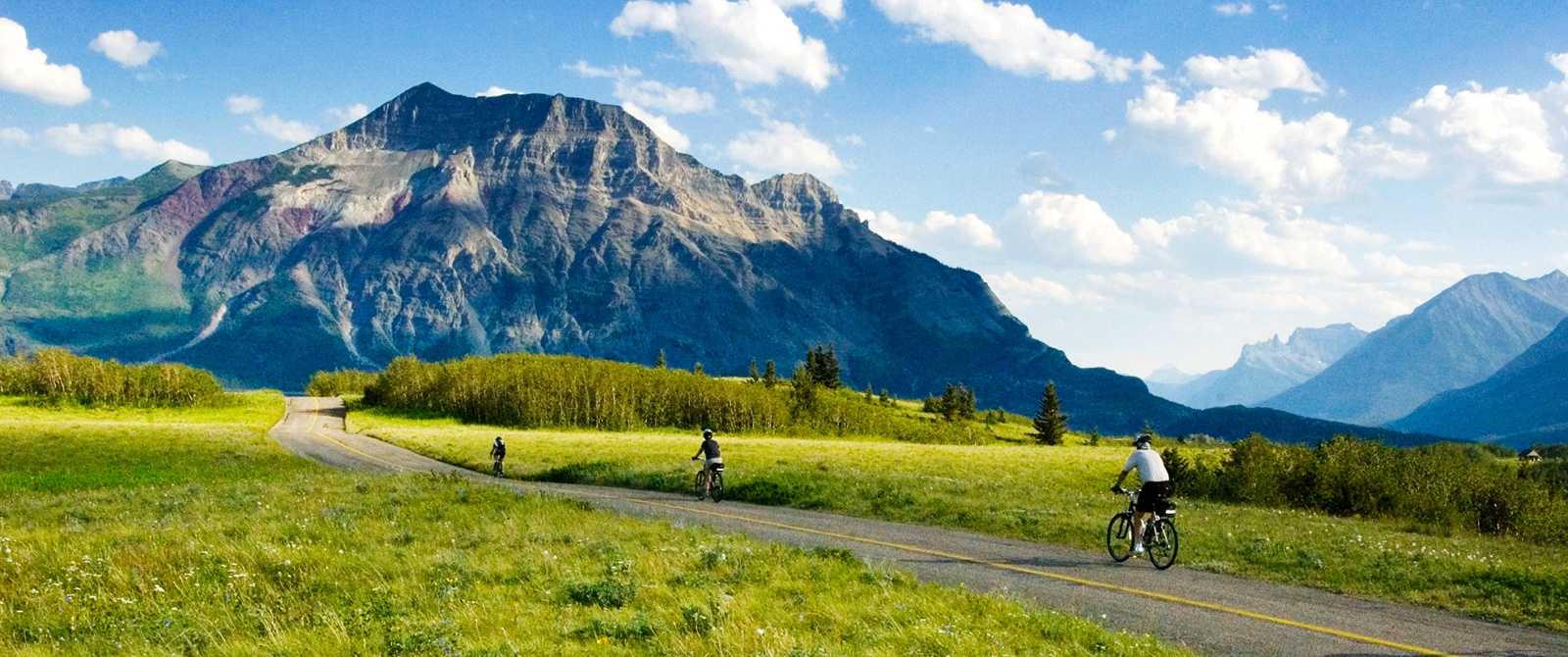
Rocky mountain bike tours with Trek Travel

Going green on our trips:

  • Reduce Plastic Waste: We have banned single-use plastic water bottles and utensils on our trips and provide every guest reusable water bottles to use during and after our trips. We are in the midst of modifying our standard from two water bottles per guest to one and encouraging guests to bring their own bottles for us to fill. This could save up to 750 pounds of plastic annually.
  • Reduce, Reuse, Upcycle We have started bike tube upcycling by finding local artisans that take used bike tires and tubes to create cool new products to sell.
  • RWGPS To reduce the number of printed materials that we produce for every on of our trips, we have shifted to using Ride with GPS (RWGPS) to offer a simplified digital version of necessary trip information.
  • Shopping Local As much as possible, our guides try to shop locally for supplies, food, and other items that are used on trips. This not only helps to support to local economies where we travel, but also provides a more authentic experience for our guests, who get to try regional food and more.
  • Best of all… biking! One of the sustainable practices most near and dear to our hearts is at the core of business: biking. Discovering destinations by bike is a fantastic way to reduce the impact you have on the local environment.

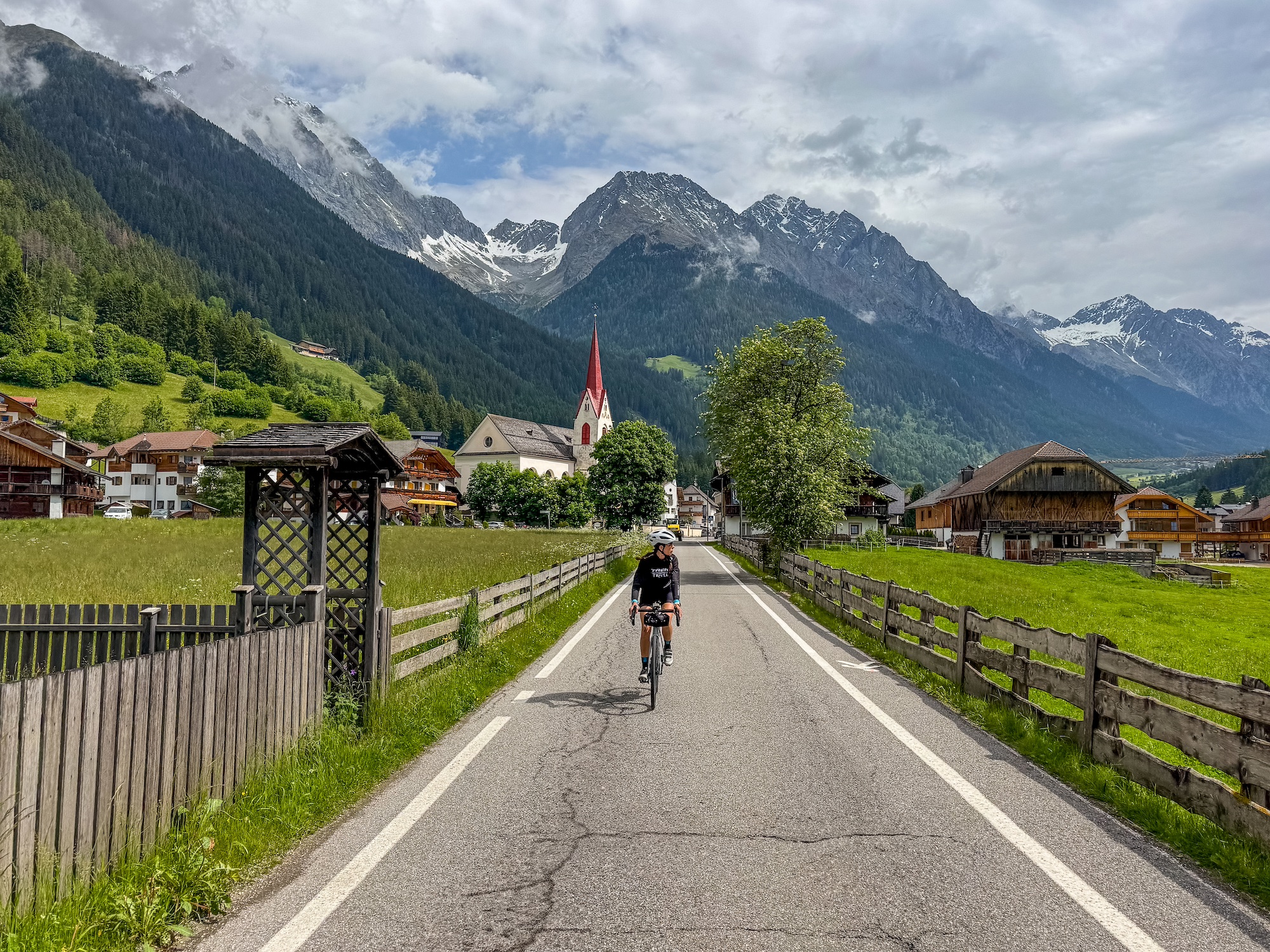
Ride in the Alps on a Trek Travel bike tour

Working with Green Partners:

For many years, we have been supporting People For Bikes, an organization dedicated to making biking more accessible to all. We believe that commuting by bike should be a safe, enjoyable option for more people and have been proud of the work done by People for Bikes in making this a reality.

People for Bikes
Show your Support

More recently, our trip design team and sustainability team developed and sent out a 16-question sustainability survey to all of our hotels, collecting information about the sustainability practices they have in place. This survey will help us determine if current and future partners are taking action to be good stewards to guests and the planet.
Get to know a couple of our hotels that are finding ways to make a positive impact for the planet:

Under Canvas Glacier

UNDER CANVAS

From Mount Rushmore to Glacier, Under Canvas has eliminated single-use plastic wherever possible and utilizes pull-chain showers and low-flow toilets to significantly reduce water usage compared to most hotels.

See the trips >

Earthbox Inn

EARTHBOX INN & SPA

Located in Washington’s charming San Juan Islands, this inn uses body care products from the local, organic Pelindaba Lavender Farm, which are provided in bulk dispensers to cut down on plastic waste.

Explore the San Juan Islands >

Industry Insider: Chris Fortune

Twenty-seven years ago, on a mission to keep manufacturing in Wisconsin, Chris Fortune bought a 15-year-old rack company known as Graber Products. And although the name has changed (now Saris Cycling Group), the company’s well-respected Saris Racks are still made right here in bicycle-crazed Madison, Wisconsin and shipped worldwide. A home-grown success story, we caught up with Chris to learn more about his passion for manufacturing and bicycle advocacy.

Briefly, tell us your story. What inspired your passion for bikes and how did you get into the cycling industry?

I grew a deep respect for the bike through my first job as a paperboy. I made my deliveries by bike and started off with a love/hate relationship. Growing up in Chicago, the winters were snowy, icy and treacherous. I cursed my bike on the worst days! Nonetheless, it served as a great tool for me at a very young age.

As I thought about my future, I dreamed of owning my own manufacturing business and building product in the US. I moved forward on this life-long goal when my wife and I bought the business and moved to Madison in 1989. A few years later we reached a true milestone and a day I’ll never forget. We shipped our first container to Japan and I could not have been more proud. Today, 30% of our business is outside the US and we ship to over 60 countries.

My passion grew for cycling as I became more immersed in the industry and learned all the benefits the bike could provide. I found that cycling could not only serve as a tool to help people with health issues but that it slows down life to a pace where you can see everything going on around you.
 
 
Saris bike racks manufactured in the USA
 
 
Where did the name “Saris” originate and what does it mean to you?

Twenty-seven years ago my wife Sara and I bought the business, then Graber Products. After an exhaustive effort to come up with a new name to represent us, she remembered a product her dad’s business launched that was named after the owner’s initials. She began crafting name combinations but options like Chrisass weren’t a fit. The best blend of Sara + Chris = Saris.

Having your name tied to the business, there’s a sense of pride in ownership to keep up the reputation. We built the business on the foundation of “doing the right thing” for customers, employees and suppliers, and we stand firmly behind that.
 

What is your favorite Saris product and why?

Picking a favorite product is like picking a favorite child. Impossible. Saris Cycling Group has a collection of brands that includes CycleOps, PowerTap and Saris. Our hottest new product that we introduced to the market is the PowerTap Pedal. We spent 1,000s of hours engineering the P1 pedal to be the most simple, intelligent and best design out there. PowerTap is known for unparalleled accuracy and reliability making the P1 something cyclists were really hungry for.

What I’m most excited about with CycleOps is the PowerSync Trainer. This electronic trainer brings the outside ride indoors and integrates with our CycleOps Virtual Training (CVT) allowing you to virtually ride anywhere in the world! The technology behind smart trainers along with our CVT software is really amazing. I don’t think riding inside has ever been so fun.

Our most well-known, iconic rack, is the Saris Bones. Innovation has always been really important to me and to the business. That’s why we partnered with designer Fabio Pedrini, based in Bologna, Italy, just a few years after buying the business. Fabio came up with the arc shaped design for this rack over 20 years ago and it remains one of most popular bike racks out there. With over a million sold you’ve likely seen them on friends, family or neighbor’s trunks. We were recently awarded a configuration trademark for this distinctive design. Configuration trademarks are rare in the bicycle industry so it was really an honor to receive this. We’ve recently launched the SuperBones, taking this product to the next level. It’s the best product ever built in this category. This trunk rack allows you to adjust the straps and arms more easily than ever before so it’s simple to load and unload and you can spend more time out riding your bike.
 
 
Saris cycling group Saris Bones rack
 
 
Saris Bones vehcile bike rack
 
 
In your opinion, what makes the Midwest a great location for bike companies?

My favorite thing about having a company in the Midwest is the people. We have some of the most down to earth, hardworking, passionate and smart people around. On top of that, Wisconsin has become one of the best states for biking because of the excellent network of paved roads. Being a dairy state, we needed the rural roads in Wisconsin to be smooth and well connected so dairy farmers could transport milk to market without risk of curdling. Today, cyclists love riding these scenic, paved roads throughout the state.
 
 
Cycling in rural wisconsin
 
 
You have seen much of the world from the seat of a bicycle. What is your favorite travel destination and why?

In 2010 I helped lead a Bicycle Infrastructure Study where a group of us went over to Europe to learn more about what state of the art bicycling looked like in the Netherlands. Since then, People for Bikes, a national bicycle advocacy organization, has run this program, the Green Lane Project, through several European cities. I joined a Green Lanes trip to Copenhagen and couldn’t believe how well this city integrates cycling. Sara and I fell in love with the ease of bicycle use in Copenhagen and the way people live their life by bike. We’re celebrating our 40th wedding anniversary this June and are thrilled to bring our three daughters and their spouses to experience Copenhagen by bike and celebrate in this special city.
 
 
Green Lanes Project
 
 
You do a lot of advocacy work to improve the quality of bicycling in America. In your opinion, what are the three keys to getting more people on bikes?

Creating a safe environment for people to ride their bike from age 8 – 80 is key. We’ve worked to help support this on the local, state and national level. Twelve years ago we started the Saris Gala. It began as a small pizza party in the back of our plant to raise money for the Wisconsin Bike Fed. Now it’s grown to be the largest single night bicycle advocacy fundraiser in the country, having generated over 1 million dollars for the Bike Fed.

We’ve also sponsored the National 5th Grade Poster contest for the last five years to inspire and create the next generation of bicycle enthusiasts. The contest gives fifth graders across the country, many in areas that are not considered bike-friendly, the opportunity to learn about the numerous inherent benefits of the bicycle and encourage them to embrace and promote those benefits in their local communities.
 
 
National 5th Grade Poster Contest
 
 
National 5th Grade Poster Contest


Bo Bikes Bama

What is it about natural disasters that bring out the best in people?

When central Alabama was hit in 2011 by a series of tornadoes, “the best in people” was about the furthest thing from anyone’s mind. These towns, from tiny Cordova, which looked like a set from The Walking Dead when the tornadoes ripped through like a zombie attack, to Tuscaloosa, home of the University of Alabama and site of the most casualties, faced one of the lowest moments in their histories.

But sometimes, it’s disasters like this that cause true rebirth.

Bo Jackson is Alabama’s Jens Voigt. Many Alabamans don’t know Jens, of course. But if you describe Jensie’s toughness, grit and happy-go-lucky attitude, they’d think you’re talking about Bo Jackson. He is known as the most famous two-sport athlete in the world, and the most famous export of Alabama, an All-Star in both baseball and football, and winner of the Heisman Trophy at Auburn. He never quits. And that’s why he’s here. Because when Bo heard that this area, including his hometown of Bessemer, was severely damaged, his first reaction was to call his friends at Trek Bikes and reach for a bike.

John Burke, CEO of Trek, says it best. “Bo is one of the greatest sports legends of the last 100 years, and an even better person. What could I say when he called? This is an incredible opportunity to do good for a lot of people. The next thing I know, we’re driving 18 hours down to Alabama to join him and help out the victims of the tornadoes.”
 
 
Bo Jackson at Bo Bikes Bama
 
 
Cycling has a way of making your senses come alive. Discovering the world on a bike is exciting. It’s visceral. You get closer to the road, the people and the curves of the earth than you can in a car, bus or a thousand on-line virtual tours. You smell the smells. Feel the air. Drink in the history.

Normally, bicycle tours are reserved for the fragrant olive groves of Tuscany and the epic views of the Alps. But it works just as well when you’re trying to get a sense of the rubble of a place that’s been battered. It’s the same ride. The same discovery. And in both cases, you learn to love the people you ride with and the destinations you visit.

Bo wanted to do something big for his home. He wanted to raise $1,000,000 in disaster relief. And he wanted to do it in a way that would draw out the communities together, as one people, getting to know the countryside together and rediscovering what makes Alabama great. There’s no better way to do that then on a bicycle.

Trek Travel saw his vision and got behind the mission. They sent Rebecca Falls, trip designer and tour expert, down to help. That was the beginning of Bo Bikes Bama, a five-day journey across central Alabama on bicycle. It was also the beginning of Bo Jackson’s third athletic career.
 
 
Trek Travel guide Rebecca Falls at Bo Bike Bama
 
 
Bo is telling his own legs to “Shut up.” If you ask him, he “doesn’t know why” he chose a cycling tour as his fundraising method, but if you ride along with him, you learn quickly. And mostly? It’s because he’s not good at it.

He lumbers up the hills. ESPN’s Greatest Athlete of All Time is no match for the slow rollers of the Deep South. But he’s there. Chugging along. The big, hulking NFL engine that could. Like in all of cycling, there’s a romance in his struggle. He’s there not as the famous pro with all his pro friends making an appearance for charity like it was some golf tournament. In Bo Bikes Bama, he’s a man of the people. Struggling right along side friends, neighbors and countrymen. Riding through their hometowns on bikes with the victims’ names etched on his top tube, and taking the same rests at the summit of every climb.

He’s no pro cyclist. But in a state known more for its love of the SEC than the TDF, he’s Alabama’s hero on two wheels.
 
 
Bo Bikes Bama
 
 
This is what Trek Travel is all about. You wouldn’t count Cordova, Alabama among the likes of Andalucia, Spain, or the Dalmatian Coast of Croatia. But Trek Travel is here, riding bikes, exploring the undiscovered reaches of a place that wasn’t built for bikes. Rebecca Falls should know. She’s from Tuscaloosa, and she’s completely impressed at what bikes have done for her home.

“How cool is it to get road bikes into communities that don’t traditionally connect with bicycling?” She asks. “As one of the most well-known and well-loved Alabamians, Bo Jackson is an incredible advocate for cycling in our home state.”

Bo Jackson understands this, almost implicitly. It might be why he chose cycling unconsciously. He knew that bikes are the great equalizer. They bring people together, and closer to the world around them. They’ve made him an athlete once again. And they’re going to change this place.

Sometimes, discovering the world on a bike isn’t all wine-tasting and epic selfies. Sometimes, it takes a natural disaster to show you a side of a place that you never saw before.
 
 
Bo Jackson at the Bo Bikes Bama start line
 
 
REGISTER TODAY FOR THE 5TH ANNUAL BO BIKES BAMA»

Johan Bruyneel Sits Down With Trek Travel

As Team RadioShack takes part in both the Vuelta a España and the USA Pro Cycling Challenge in Colorado this week, we are lucky to have Team RadioShack Manager Johan Bruyneel answer some questions about cycling, racing, and how bikes can change the world.

Johan is currently lending a hand to World Bicycle Relief’s Grand Slam for Zambia. Their goal: 1,000 bikes. 1,000 lives changed. For every donation, you’ll help provide a bike for a child in Zambia.  Children who receive a bike are able to get to school quicker and safer; a journey that often takes up to 4 hours by foot!  In addition to helping Zambian children, you’ll also be entered to win all sorts of great prizes like a SRAM Red Gruppo, a Trek Madone, a Trek Travel Trip, and more!

And now some Q&A with Johan Bruyneel (JB):

What major race do you think is the most fun to watch from a fan perspective?
JB: I think every cycling fan dreams of going to the Tour de France.  It’s the race that gets the most worldwide coverage and it’s the most prestigious race to win.  A lot of people go to the Grand Depart or Paris, but to get the real experience, I also suggest taking in the climbs.  If you go to Alpe d’Huez, fans arrive 2-3 days before the race actually passes and it becomes a massive outdoor party on a mountain.  I’m not sure if there’s anything like that in all of sports.

The Giro d’Italia is another race that is great.  Italy is a beautiful country and the route is often harder than the Tour which makes for some exciting racing.  If you ride a bike, then it’s definitely a country to check out.

And then I may be biased since I’m Belgian, but the races in Belgium are great, especially Flanders.  The Belgians are so passionate about cycling.  It’s so chaotic with fans trying to see the riders at various points during the race.  The cobbles, the climbs … It’s totally different than the Giro and Tour so it’s hard to compare, but it’s definitely something I would also suggest.

How often do you get out yourself to ride during the season?
JB:  Unfortunately, not very often.  For starters, I have a bad back so it’s hard for me to do a real training program.  Then with managing a cycling team, traveling to races and trying to squeeze in as much time with my family, it’s not easy to find 2 or 3 hours in a day.  I do like to go out for casual rides with Victoria and Eva. We’ll strap my son Christian to my bike and we’ll do a nice leisurely ride in Hyde Park.  A nice family outing.  But my racing days are over.

Who do you think is one of the most exciting up and coming professional racers and why?
JB:  Tough to name just one.  Peter Sagan from Liquigas is definitely one.  He’s already won some races, but is still young and will get even better.

There’s a rider on our Trek U23 squad by the name of Lawson Craddock.  He’s definitely someone to watch out for.  Actually, there’s a lot of up and coming Americans who will be able to carry the torch –

Ben King, Matthew Busche, Brent Bookwalter, Teejay Van Garderen and Taylor Phinney to name just a few.

With cycling becoming more globalized, there’s more exposure in historically non-traditional cycling countries, which mainly means outside of Europe.  Australia is a country that sticks out in my mind.  There’s already a nice talent pool, but with Cadel winning the Tour and the start of GreenEdge, I think we’ll see that cycling will continue to grow in Australia.

I also have my eye on China.  I was there for a few days in 2008 prior to the Olympics.  Nike was hosting a Hall of Coaches event and I had the opportunity to share some of my philosophies and knowledge with Chinese cycling coaches.  With a population over 1 billion, there are definitely people who are or can be talented cyclists.  It’s just a matter of finding them and developing their skills and talents!

If you could go on any Trek Travel vacation which one would it be? You would have to relax though!
JB:  Hmmm.  I would pick any of the Tuscany Luxury trips.  Nice riding routes, beautiful scenery, great food and of course the vino.  Definitely the perfect combination of everything I like!

What’s the best or funniest question a Trek Travel guest has ever asked you?
JB:  I remember a few years ago at the Tour, I was getting a bunch of questions from the Trek Travel guests about the race strategy, what it was like to have Lance and Alberto on the same team  and so on.  A guy raises his hand and asks: “How do you go to the bathroom?”  Of course he was referring to during the race, but he didn’t say that ,nor was anyone, including myself, expecting that question.  Everyone started laughing so I responded to his question “No differently than you, unless you know something I don’t.”  I don’t think he lived that down for the rest of the trip!

How did you originally get involved with World Bicycle Relief and when?
JB:  Well when I was with Astana, I signed SRAM for components.  One of the founders of SRAM, FK Day, came to my house one day.  He didn’t mention anything about professional racing.  All he wanted to tell me was about World Bicycle Relief, why and how he founded it.  He asked if I wanted to help him with the mission, which is to provide access to independence and livelihood through the power of bicycles.  He showed me pictures and videos, and how a bicycle can change a life forever.  Personally, I owe everything in my life to the bike so right then I knew I had to be part of this organization.  I’m proud to serve on the Board and carry out the mission of WBR in any way possible.

Why do you think the bicycle has the power to change the world?
JB:  I don’t think. I know.  I went last year to Zambia and witnessed the power of bicycles.  My job as Team Manager has me around the most expensive bikes in the world.  But truthfully, the most valuable bikes are $134 WBR bikes.  A Zambian child normally has to walk up to 4 hours to and from school on dangerous roads.  Because of this, dropout rates are high.  Now when you give a bike, that child can reach school quicker and safer.  He or she graduates, gets a job and can support him or herself, as well as other family and community members.  Because of the bicycle, that person becomes economically independent.  We also see that with an education, the rate of contracting HIV/AIDS decreases and women have fewer children.  So there are a lot of health and economic benefits that can be attained.  WBR has the goal of distributing 50,000 bikes.  The impact I’ve seen is amazing and I’m confident that when we reach this goal, you’ll see a different Zambia!

Private

If a date is marked as Private, it is reserved for a private group.

Don’t see exactly what you are looking for or looking for a custom date?
Call our trip consultants at 866-464-8735

What is the Difference?

Luxury:

Enjoy luxurious accommodations handpicked for a refined experience. From signature spa treatments to special dining moments, you’ll be more than provided for— you’ll be pampered.

Explorer:

These handpicked hotels provide relaxation and fun in a casual and comfortable environment. Delicious cuisine and great service mix perfectly for a memorable stay.

Combined:

On select cycling vacations, you’ll stay at a mix of Explorer and Luxury hotels. Rest assured, no matter which hotel level you’re at, our trip designers carefully select every accommodation.

Activity Levels

Level 1:

Road: 1-3 hours of riding. Up to 25 mi (40 km). Up to 1,000 ft (300 m).

Gravel: 1-3 hours of riding. Up to 20 mi (35 km). Up to 1,000 ft (300 m).

Hiking: 1-3 hours of hiking. Up to 5 mi (8 km). Up to 1,000 ft (300 m).

Level 2:

Road: 2-4 hours of riding. 20-35 mi (35-60 km). Up to 2,500 ft (750 m).

Gravel: 2-4 hours of riding. 15-30 mi (25-45 km). Up to 2,000 ft (300 m).

Hiking: 2-4 hours of hiking. 4-8 mi (6-12 km). Up to 1,500 ft (450 m).

Level 3:

Road: 3-5 hours of riding. 25-55 mi (40-85 km). Up to 4,500 ft (1,500 m).

Gravel: 3-5 hours of riding. 20-40 mi (35-60 km). Up to 3,000 ft (900 m).

Hiking: 3-5 hours of hiking. 6-10 mi (9-16 km). Up to 2,000 ft (600 m).

Level 4:

Road: 4+ hours of riding. 40-70 mi (60-110 km). Up to 8,000 ft (2,400 m).

Gravel: 4+ hours of riding. 30-50 mi (45-80 km). Up to 4,000 ft (1,200 m).

Hiking: 4+ hours of hiking. 7-15 mi (11-24 km). Up to 4,000 ft (1,200 m).

What are your trip styles?

Classic Bike:

Explore beautiful destinations with a curated blend of guided activities, local cuisine, handpicked accommodations, and itineraries to suit every traveler, from laid-back adventures to luxurious escapes.

Gravel:

Venture off the beaten path to unforgettable places, with fully-supported routes that combine gravel and paved roads in classic Trek Travel style.

Cross Country:

Tackle an epic adventure that takes you point-to-point across mountains, countryside, and more.

Pro Race:

See the pros in action at the biggest cycling events of the year.

Hiking & Walking:

Step into adventure with carefully designed routes, unparalleled hospitality, and deep-routed local connections.

Ride Camp:

Train like the pros in some of their favorite riding destinations.

Self-Guided:

Enjoy a bike tour on your schedule with just your chosen travel companions.

Single Occupancy

Sometimes it’s more convenient and comfortable to have your own room while on vacation. We understand and that’s why we offer a Single Occupancy option. The additional price guarantees a private room all to yourself